


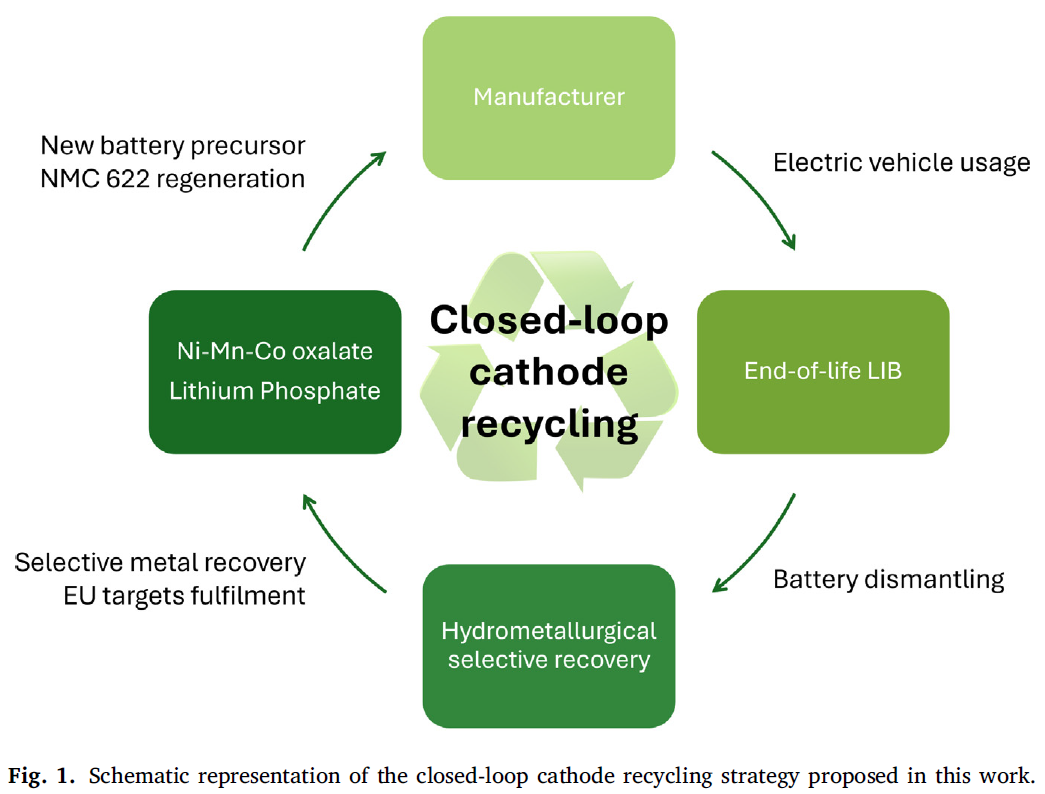
Lithium-ion batteries contain valuable materials such as lithium, cobalt, nickel and manganese. Recovering these metals at the end of a battery's life is essential to reduce waste and secure future supplies, but current recycling processes often rely on aggressive chemicals.
Researchers from the FREE4LIB project's partner EURECAT have developed and tested a new recycling process based on natural deep eutectic solvents (NADES). These are liquids made from naturally derived compounds that can dissolve battery materials without using conventional mineral acids.
The process starts by separating the aluminium foil from the battery cathode. The remaining active material is then treated with the solvent, which dissolves the valuable metals. In a final step, the metals are separated and recovered so they can potentially be used to manufacture new battery materials.
The researchers found that the process could recover almost all of the lithium, cobalt, nickel and manganese from spent NMC622 battery cathodes in around 10 minutes. The recovered transition metals were obtained as a mixed oxalate suitable for producing new cathode materials, while lithium was recovered as lithium phosphate.
These results show that natural solvents could offer a practical alternative for battery recycling while helping recover critical raw materials more efficiently.
You can read the full paper here


